AI Translation for Churches: What Ministry Leaders Actually Need to Know
AI Translation for Churches: What Ministry Leaders Actually Need to Know
Most churches today are more multilingual than they were five years ago. Some of that comes from international students, expats, and tourists passing through. Some of it comes from harder stories, families who had to leave their home countries and are rebuilding their lives in a new place, often attending a church where they understand maybe half of what's being said. And some of it is simply the quiet presence of linguistic minorities who've always been there, sitting through services in a language that isn't their first.
Translation, in other words, isn't a nice-to-have anymore. It's part of how a church welcomes people.
The question is how to do it without a huge budget, a new hardware setup, or a rotating team of volunteers. That's where AI translation comes in. This post walks through what AI translation actually is, where it fits in a church setting, and what to think about before choosing a tool.
What AI translation actually is
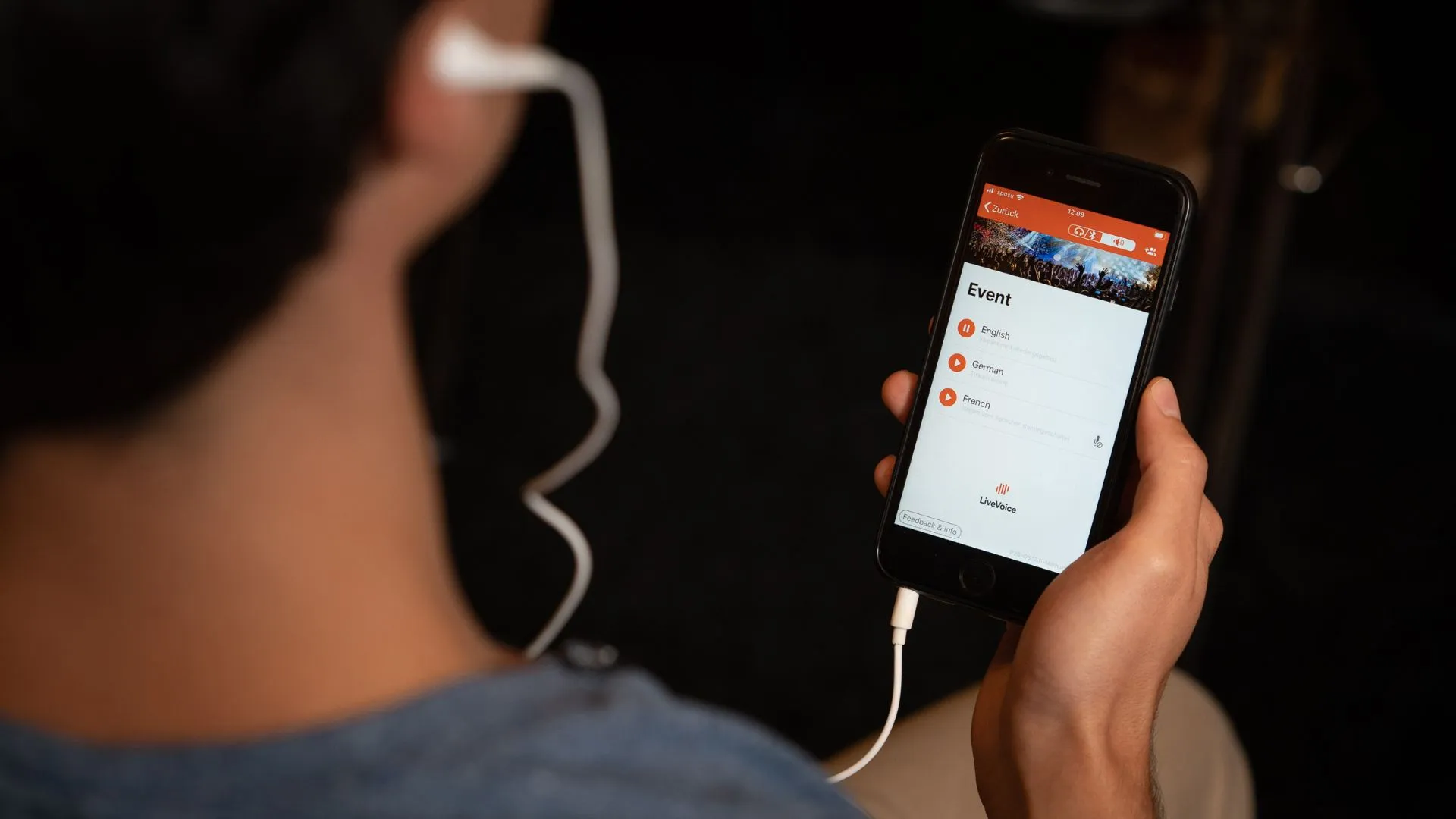
AI translation takes the speaker's voice, transcribes it in real time, translates it into another language, and delivers it as a synthesized voice and as captions on their phone. Usually within 2 - 4 seconds, a little longer for longer sentences.
Two things worth being precise about:
We call it translation, not interpretation. Interpreters are humans. They read a room, catch a joke, and handle the emotional weight of a prayer. AI handles language — it doesn't interpret meaning the way a person does. That distinction is real and worth keeping clear.
Accuracy is around 85–95%, not 100%. It depends on audio quality, the speaker's pace, dialect, and background noise. It's genuinely useful. It's not flawless. Any platform promising perfect AI translation is overselling.
An honest comparison: AI vs. human interpreters
Neither replaces the other. They're good at different things.
| AI translation | Human interpreter | |
|---|---|---|
| Availability | Every service, no scheduling | Depends on who is available |
| Languages | Up to 60+ at once | One per interpreter |
| Consistency | Same quality start to finish | Quality varies with fatigue |
| Emotional nuance | Limited | Strong |
| Cultural & theological judgment | Limited | Strong |
| Cost | Pay-per-minute | Volunteer |
| Works with poor audio | Struggles | Adapts |
For most churches, AI or humans is a question of fit, not quality.
Key benefits of AI translation for your church
Languages nobody on staff speaks. With AI, you're no longer limited to "what volunteers do we have?" The range expands to whatever your congregation actually needs, including languages with no interpreters available locally.
Any language, on demand without anyone at the sound desk doing a thing. Picture a Sunday where a couple walks in and their language isn't on the list. Instead of waiting for someone to figure it out, they pick their language on their phone and the AI channel spins up on the spot. Nobody at the sound desk has to intervene. For churches with irregular visitors and a growing multicultural mix, this quietly changes what "being welcoming" looks like.
Relief for bilingual volunteers. The people who usually interpret on Sundays, often only a small group of volunteers, can focus their skills on other areas or simply take a breather during service.
A practical way to start
- 1.Pick a single service as a trial.
- 2.Run it with one or two languages you know you need.
- 3.Ask multilingual members to use it and share honest feedback.
- 4.Decide where AI fits, and where you still want a human interpreter.
Expect imperfection. In most cases, AI translation is still worth it.
In the past, we were limited to just a few languages. With LiveVoice, we can now offer over 50 languages without any extra organizational effort.
Common questions
"Is it accurate enough for scripture and preaching?" For controlled speech into a good microphone, yes, 85–95% is enough to follow a sermon meaningfully. For church-specific terms, names, and theological vocabulary, you'll want to use a platform that lets you add custom vocabulary. Audio quality matters more than anything else: plug into the sound desk, don't rely on a phone in the back row.
"What about cost?" You pay for two things: an account plan, and the AI services you actually use. The account plan sizes itself to how many listeners you expect, with day plans for occasional services and subscription plans for weekly use. AI Voice Translation and Closed Captions sit on top of that, billed by the minute, so nothing runs up a bill when you're not using it.
Everything can be booked directly from your account. See full pricing here. Non-profit discounts are available too upon request.
"Do we need new hardware?" No. If you have a sound system, a stable internet connection, and listeners with smartphones, you have what you need. No receiver units to hand out, no booths, no cables running across the sanctuary. Listeners scan a QR code and pick their language.
Translation as participation
What translation (and interpretation) is really about is whether people can participate. Whether they can pray along instead of guessing when to close their eyes. Whether they can follow the teaching and belong to the service they're in rather than watching it happen.
AI translation won't build community on its own. The handshake at the door, the invitation to Sunday lunch, the slow work of learning names, all of that still matters. But language is one of the harder barriers for a newcomer to cross alone, and this is a real way to lower it.
Try it on a Sunday
LiveVoice has a free plan for up to 3 listeners with 20 AI minutes included. Just try for yourself.
Frequently asked questions
Yes. AI translation works in real time: The speaker talks, and listeners hear the translated audio or read translated captions on their phone within a few seconds. There's no setup required during the service itself. See technical requirements to confirm your setup is ready.
Accuracy ranges from 85–95%, depending on audio quality, the speaker's pace, and background noise. For a clear microphone feed into a good sound system, most listeners can follow a sermon without difficulty. AI translation is not flawless, it works best with deliberate speech and a clean audio signal.
Out of the box, AI translation may miss specific names, scripture references, or theological terms. Most platforms, including LiveVoice, let you add a custom glossary so the system learns the vocabulary your church uses regularly.
Two parts make up the price: an account plan sized to your expected number of participants, plus any AI services you want to add (Voice Translation, Closed Captions), billed by the minute. Run translation every week? A subscription plan is the better fit. Only need it occasionally? Day plans cover that. Find our pricing here. Non-profit discounts are available.
No. If the church has a sound system, a stable internet connection, and congregation members with smartphones, everything is in place. Listeners access their language channel by scanning a QR code — no receiver units, no booths, no additional equipment.
AI translation can run multiple language channels simultaneously. LiveVoice supports 70+ languages at once — far more than any volunteer interpreter team can cover.
A human interpreter reads the room, handles emotional nuance, and makes judgment calls about cultural or theological meaning. AI translation handles language — it converts speech to text, translates it, and delivers it to listeners. AI works at any hour with no scheduling; human interpreters are better for high-stakes moments, Q&A formats, or content that requires cultural sensitivity. Most churches use both.
Yes with AI On Demand, listeners can select their own language directly in the app without any action from the sound desk. This is useful for visitors whose languages weren't set up in advance.
The easiest way is to test it on a single midweek service first, with one or two languages you know you need. Run it alongside your normal setup, ask multilingual members for feedback, and adjust from there. LiveVoice offers a free plan so you can test before committing.