Cinema in the Subway
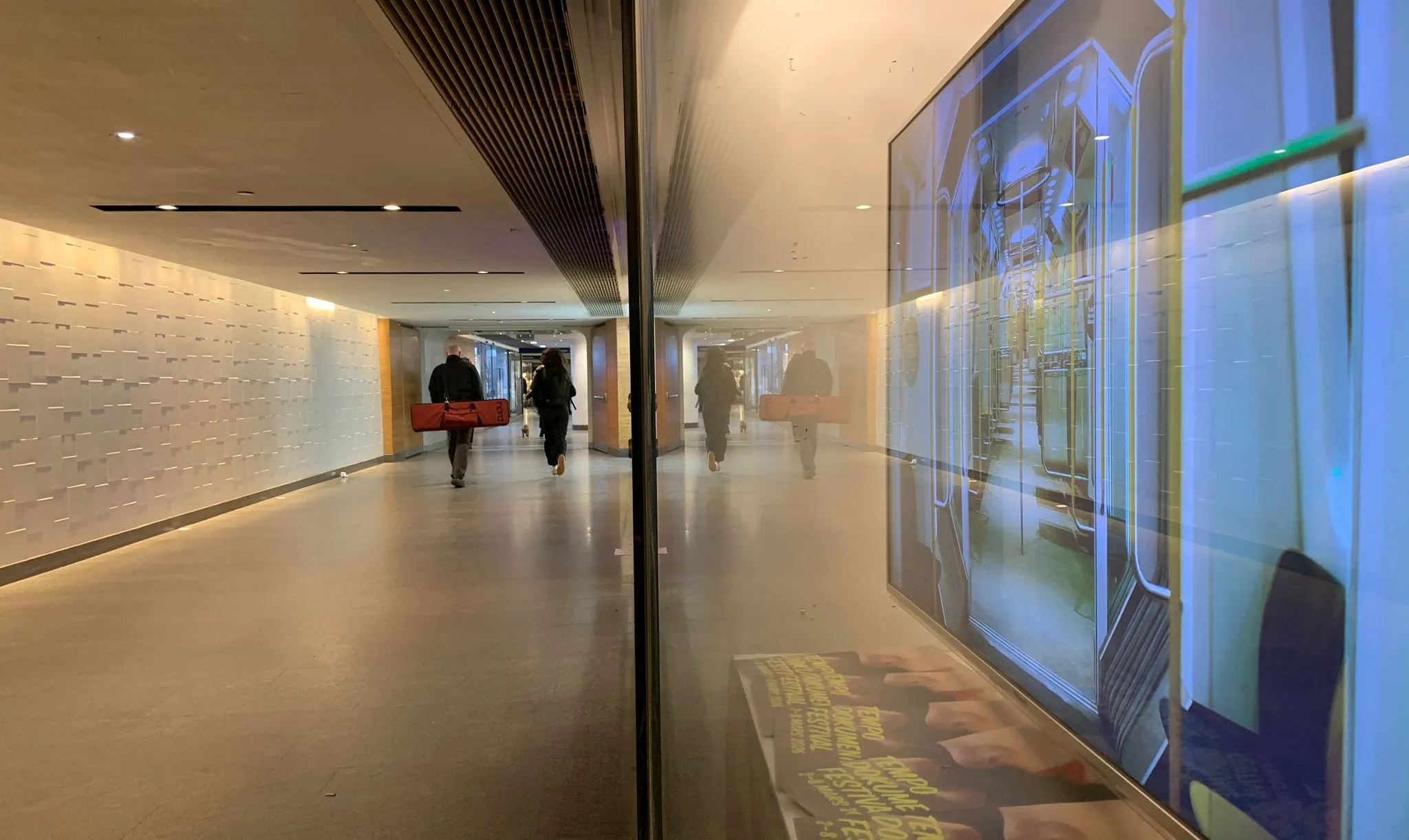
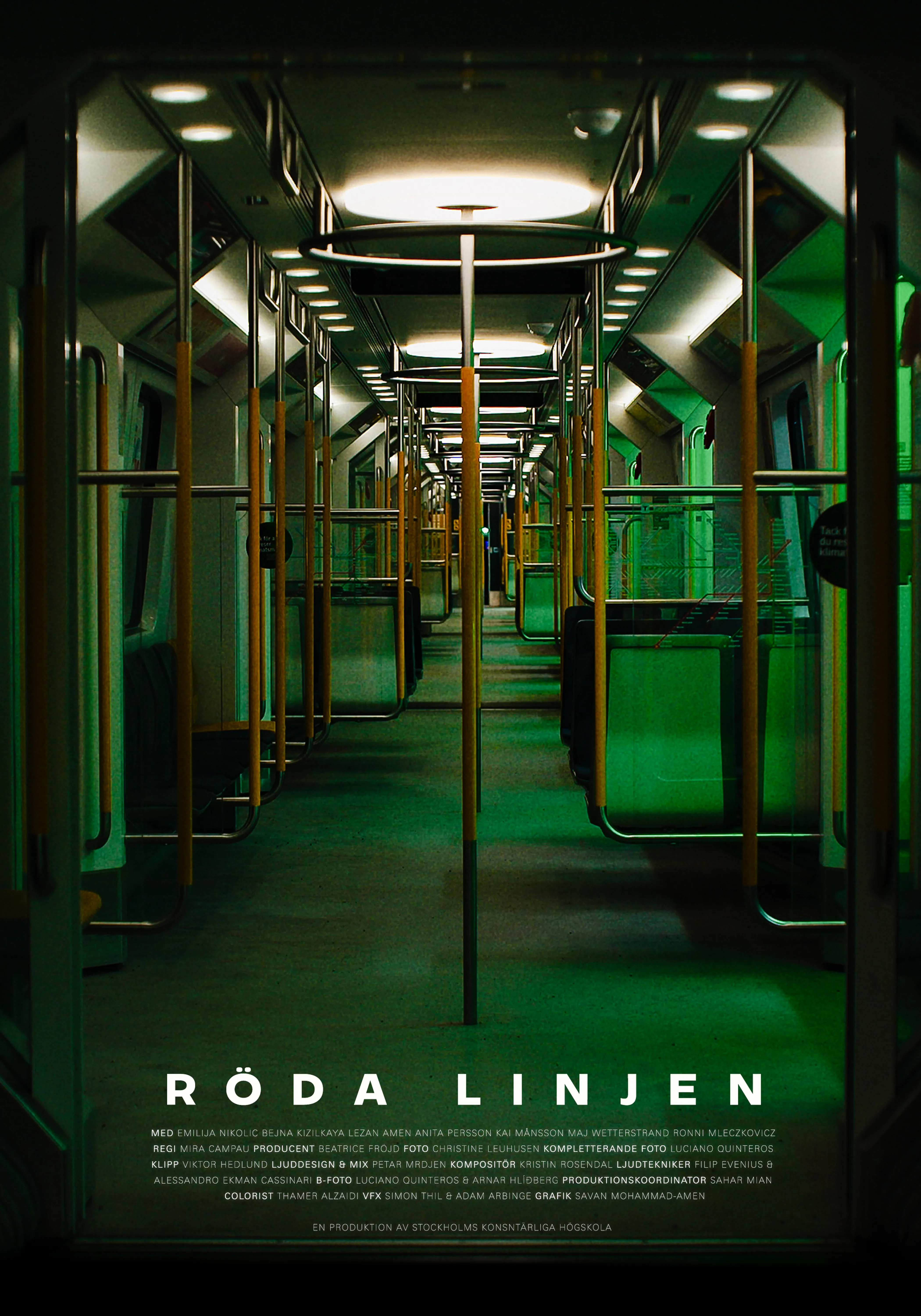
When The Red Line was selected for Tempo, Sweden's largest documentary festival, the setting couldn't have been more fitting. The short film, a poetic exploration of urban life along Stockholm's red metro line, was to be screened not only inside a cinema, but directly in a subway station, along the very line it portrays. For one week, 24/7, commuters would encounter the film in their daily routine.
There was just one problem: the screen was mounted behind glass in a public tunnel, with no infrastructure in place for sound. For a film where sound is central to the emotional experience, that simply wasn't an option. So the team, particularly sound designer Petar Mrdjen, embarked on a search for a solution. The following interview with producer Beatrice Fröjd captures their journey.
LiveVoice: Beatrice, you're the producer of The Red Line. For those who haven't come across it yet - how would you describe the film?
Beatrice: The film started as a kind of exploration of Stockholm through its red metro line. It's a very short line, but it connects very different neighborhoods - socially, economically, architecturally. The director Mira Campau, I and the team were interested in how people relate to the city depending on where they live. But over time it became more of a poetic reflection on urban life - on movement, on shared spaces, and on the feeling of being alone together.
LiveVoice: Rather than screening in a cinema, the film is shown inside a metro station, the very place it's about. What does it mean to bring the film to the people it portrays, rather than asking them to come to you?
Beatrice: It felt very special, because the film is about the metro - and suddenly it's shown to the people who actually use it every day. We'd been dreaming about this for almost a year before Tempo made it possible. Showing it in the subway felt not just fitting, but almost necessary. It reaches the people actually passing through every day, not just an audience who has already chosen to show up at a cinema.
And it creates this added presence... a kind of double presence: you're locked into the world of the subway, even though you're already in the subway. It becomes this almost crazy experience because you're there already.
Sound as the emotional core
LiveVoice: Sound seemed to be such a central part of the film. Can you describe what the audience actually hears?
Beatrice: The sound is a huge part of the experience. It takes everyday sounds - trains, movement, construction - and transforms them into something much more emotional, almost otherworldly. There are moments with whispers moving through space, like a collective voice. In the cinema, they come from surround speakers - from behind you, beside you - and you feel like you're part of this collective soul of the train. Then there are the deep sounds: rumbling machinery underground, rocks falling, rhythms that make you feel very small against something enormous. The sound is big. Without it, you lose that layer completely.
LiveVoice: So leaving out the sound was never really an option.
Beatrice: No. The festival would have accepted a version without sound, but for us it did not feel like an option. The sound is really crucial and we were not going to touch on that.
"(...) you feel like you're part of this collective soul of the train."
The challenge: no speakers, no infrastructure
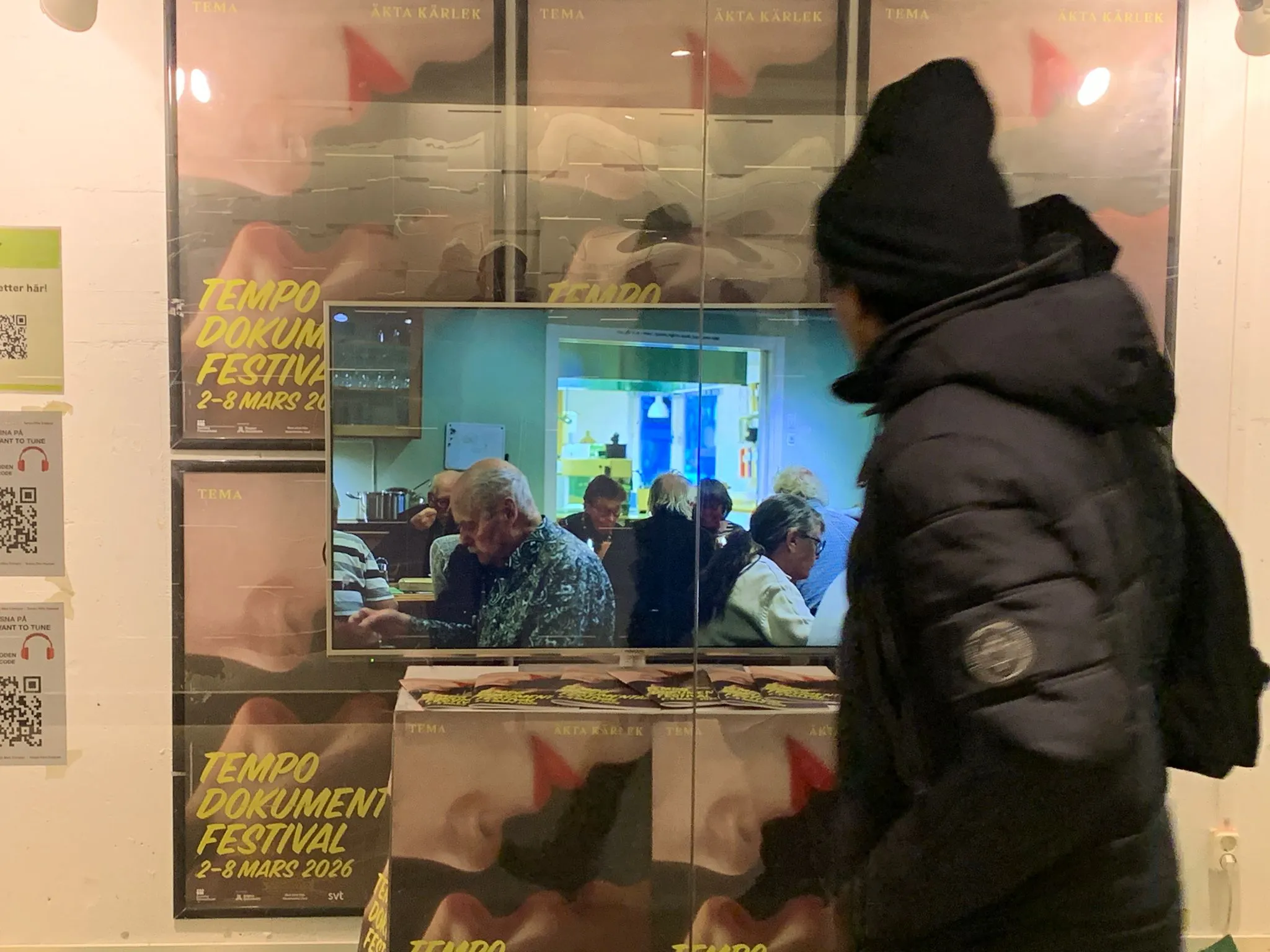
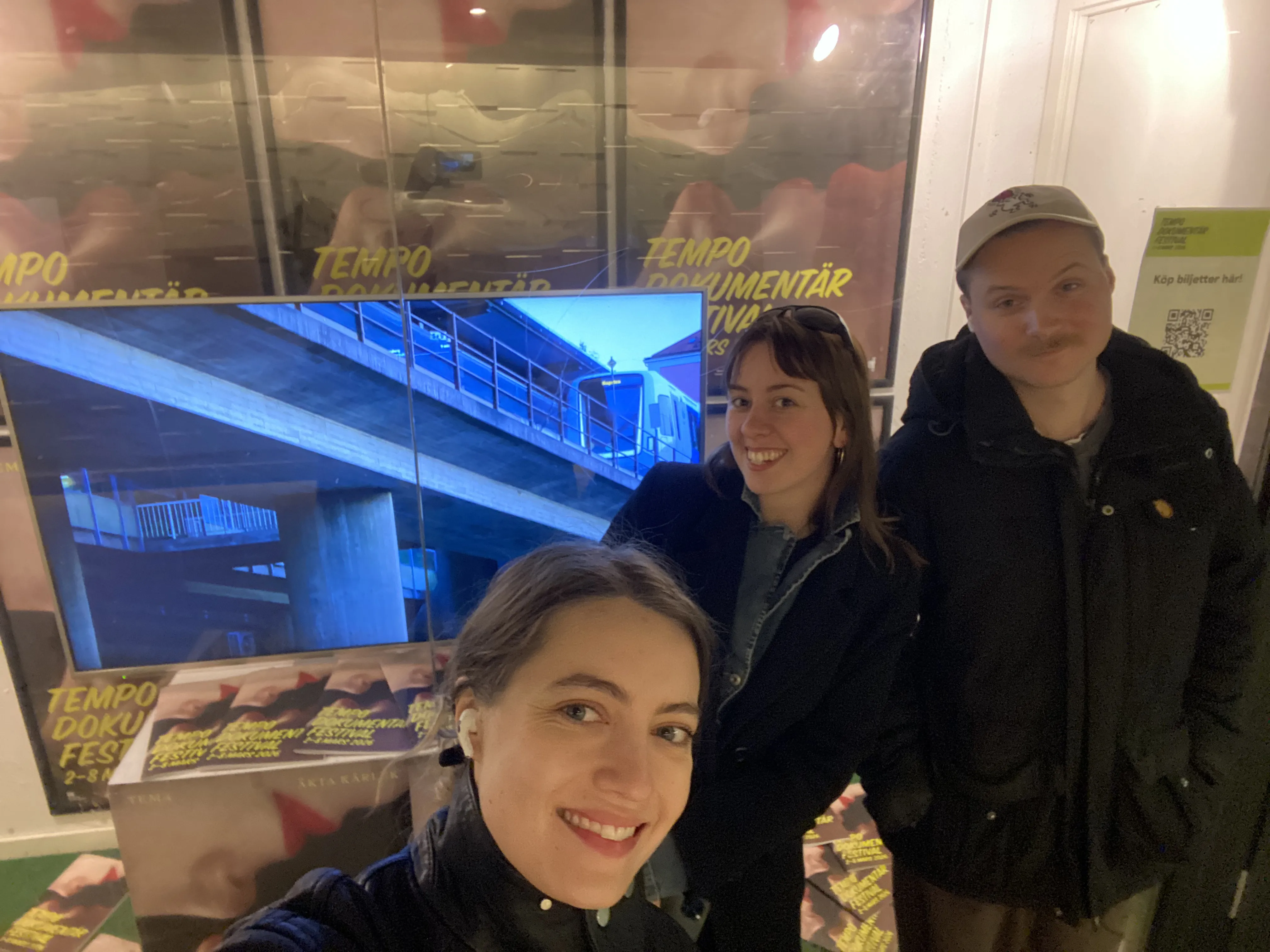
Beatrice explains that the film was shown on a two-meter-wide glass monitor, deep inside the installation space at Hornstull metro station. But unfortunately, there were no network cables, no Wi-Fi, and — because the site sat in a public transit tunnel where sound levels are tightly regulated — no possibility of using speakers. The circumstances eliminated the most obvious choice before the work even began.
The first alternative the team considered was translating the sound into words: descriptive captions that would convey what the audience was hearing. But then a different idea emerged: what if the sound could come directly to each viewer, through their own headphones, via their own phone?
“We were like — it would be totally sick if people could listen to the film on their own, while standing there. Scan a QR code, bring their own headphones, tap in. But how were we going to do that? Tempo wasn't equipped to deal with it. It was on our table.”
Finding LiveVoice
So the team began researching...
Beatrice: We were looking at coding it ourselves, but it felt too unstable. Then LiveVoice came up as an option that was very safe and robust. And there was very little delay when we tried it.
Beatrice: The test that convinced us was quite memorable. We ran it over Zoom, Petar, the sound designer, played ‘The Lord of the Rings’ from his computer, shared his screen, and simultaneously sent a LiveVoice link. We could listen to it, and it was synced to the image - even from Zoom it was working really well, so we were like: okay, this is the best option. Lukas at LiveVoice provided us access to a premium version for two weeks supporting up to 50 simultaneous listeners. Visitors at the tunnel would scan a QR code, land on a custom-designed page styled around the red line, and with a single tap begin hearing the stream.
"It was so so smooth - really fluid and intuitive. Even for someone who isn’t very technical, it felt easy to navigate and quite organic."
Making it work - Against all odds
The physical setup was by necessity, creative. No network cables in the tunnel. No Wi-Fi of any kind. Since LiveVoice is cloud-based, it depends on a stable internet connection — and there wasn't one built in. But the team also found a solution for that.
Beatrice: We just bought a cheap SIM card, put it in an old iPhone, and used that as a hotspot for the computer running the stream. We didn't really know if it was going to work. But it did. Audio data is light enough that a 4G mobile connection handled it without issue - but with video this would have never been possible.
An optimized sound for listening experience with headphones
Sound designer Petar Mrdjen went further still. He created a new mix of the sound specifically optimized for headphone listening.
"I wouldn't have asked that of him. But he thought it was fascinating and wanted to maximize the sound of the film for that experience. He tried a few different versions, then settled on a mono mix that brought out the background sounds and ambient textures in a way that headphones carry particularly well. It was very cool."
The initiative of the sound designer is really a reminder that when sound is treated as seriously as an artistic medium in its own right, not just an accompaniment — it opens up creative possibilities far beyond simply making something audible.
LiveVoice: There's something almost philosophical about it — people are looking at the same thing, but they are still in their own world since they are all listening via their headphones... Was that intentional?
Beatrice: There's a scene in the film built around exactly that idea. We originally wanted a sound collage of the 'content' people watch on their phones on a train, but that would've been a licensing nightmare — so we used a collage of people's internal thoughts instead. On headphones, it already feels extra meta, and for this installation we pushed that further, emphasizing the whispers so they sound like they're right beside you. We wanted people to have the best possible sound experience.
"We wanted people to have the best possible sound experience."
What this means beyond one film
Beatrice: Sound can add so much to a film or art installation shown in public. It creates a more immersive experience — it can also block out the distractions around you and draw you fully into the work. And it was pretty simple. Even outdoors, even without any infrastructure, with just a hotspot and a SIM card from 2012 — it was fascinating how easy it was to do.
"I would definitely use LiveVoice again if we were doing something similar. And I think it's something for museums, for outdoor public art installations — anywhere that speakers aren't possible or practical."
Where to find The Red Line
The Red Line premiered at Tempo Documentary Festival and has since screened at Copenhagen International Documentary Festival (CPH:DOX). The film is continuing through the international festival circuit, and was air on Swedish public television SVT in summer 2026. Further public installations are in the works.
Endnote: During the Interview, Beatrice kept emphasizing the team effort behind the short-film. Thus we want to close by giving a big shoutout to the core team behind “The Red Line”: Mira Campau (Director), Christine Leuhusen (Director of Photography), Viktor Hedlund (Editor), Petar Mrdjen (Sound Designer), and Kristin Rosendahl (Music Composer).